AI-powered logistics operations for a more predictable supply chain.
Veriqo is an AI-powered logistics operations platform built for the complexity of moving goods across Nigeria. It gives operations teams a single view of shipments, fleets, disruptions, and performance — turning operational signals into clearer decisions and faster action.
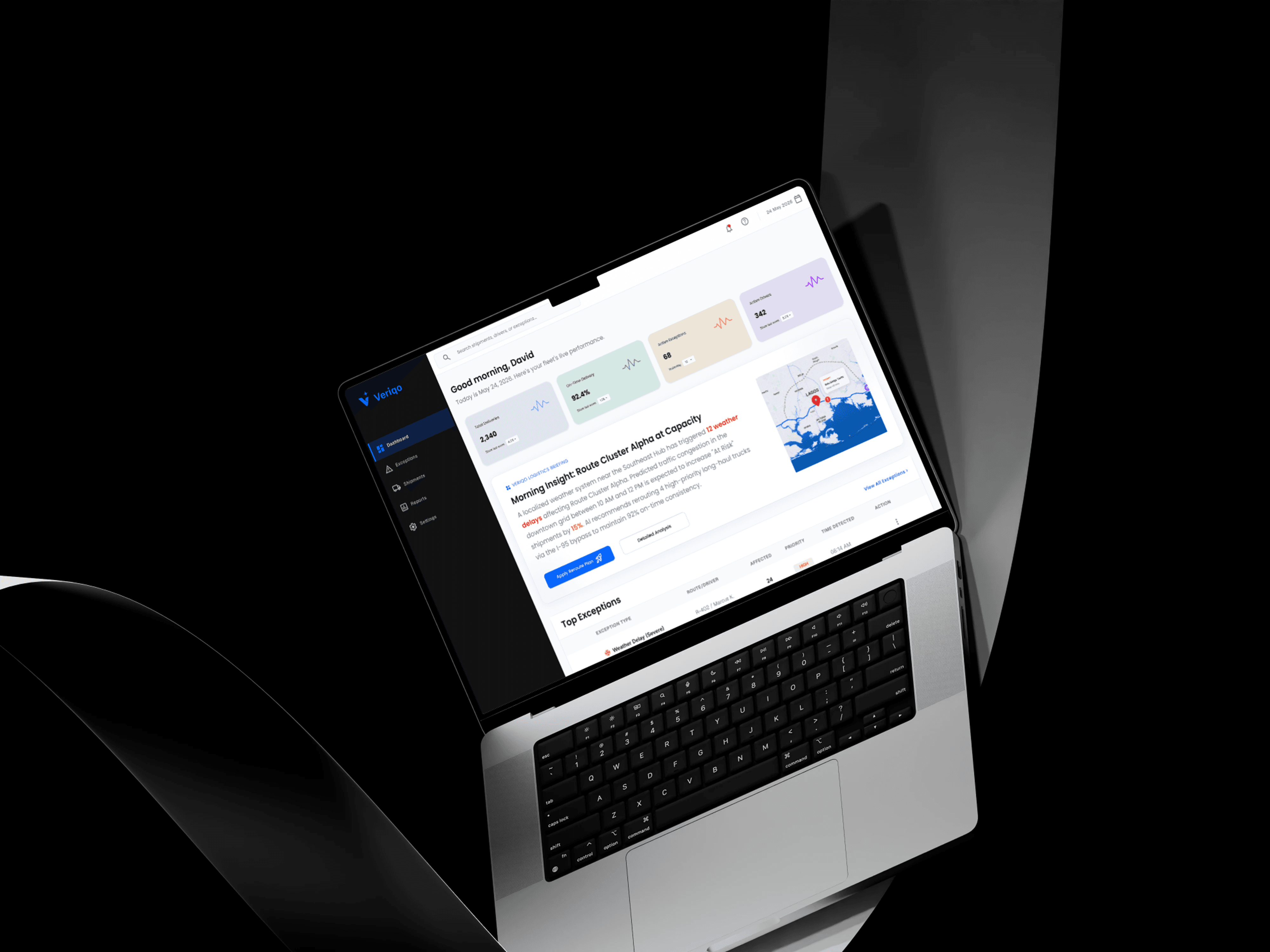
Nigeria / Africa
Product Designer
Scope
Veriqo
Design Brief
Challenges
Logistics teams manage multiple moving parts at once — shipments, drivers, routes, exceptions and delivery timelines. When something goes wrong, operations teams need to identify the problem quickly and determine what to do next
Opportunity
Design a centralized logistics operations platform that doesn't just show what is happening, but helps teams understand risks and respond to them.
Design goal
Create an intelligent operations experience that allows teams to:
Monitor → Detect → Predict → Recommend → Act
My Focus
I focused on translating complex operational information into a clear interface where important issues are surfaced early and actions are easy to take.
The Problem
Product Opportunity
From visibility to intervention
Traditional logistics tools show teams what is happening. Veriqo is designed to help them understand why it is happening and what to do next.
When a shipment is at risk, Veriqo moves the workflow from:
Monitor → Detect → Predict → Recommend → Act
This shifts Veriqo from a tracking dashboard to an AI-powered decision layer for logistics operations.
Design Goal

Product Strategy
Veriqo is structured around the journey from identifying an operational signal to taking action.

Process
User Flow
The flow is designed to help operations teams move from identifying a disruption to understanding it and taking the right action all within one connected workflow.

AI Product Thinking
Veriqo uses AI where it can reduce the time and effort required to understand operational disruptions. Instead of adding a generic AI assistant, I focused the intelligence around detecting risks, explaining what is happening, predicting potential impact, and recommending the next action.

Design System
I developed a visual system to keep Veriqo's operational interfaces consistent across navigation, data, alerts, maps, and AI recommendations.


Key Screens:
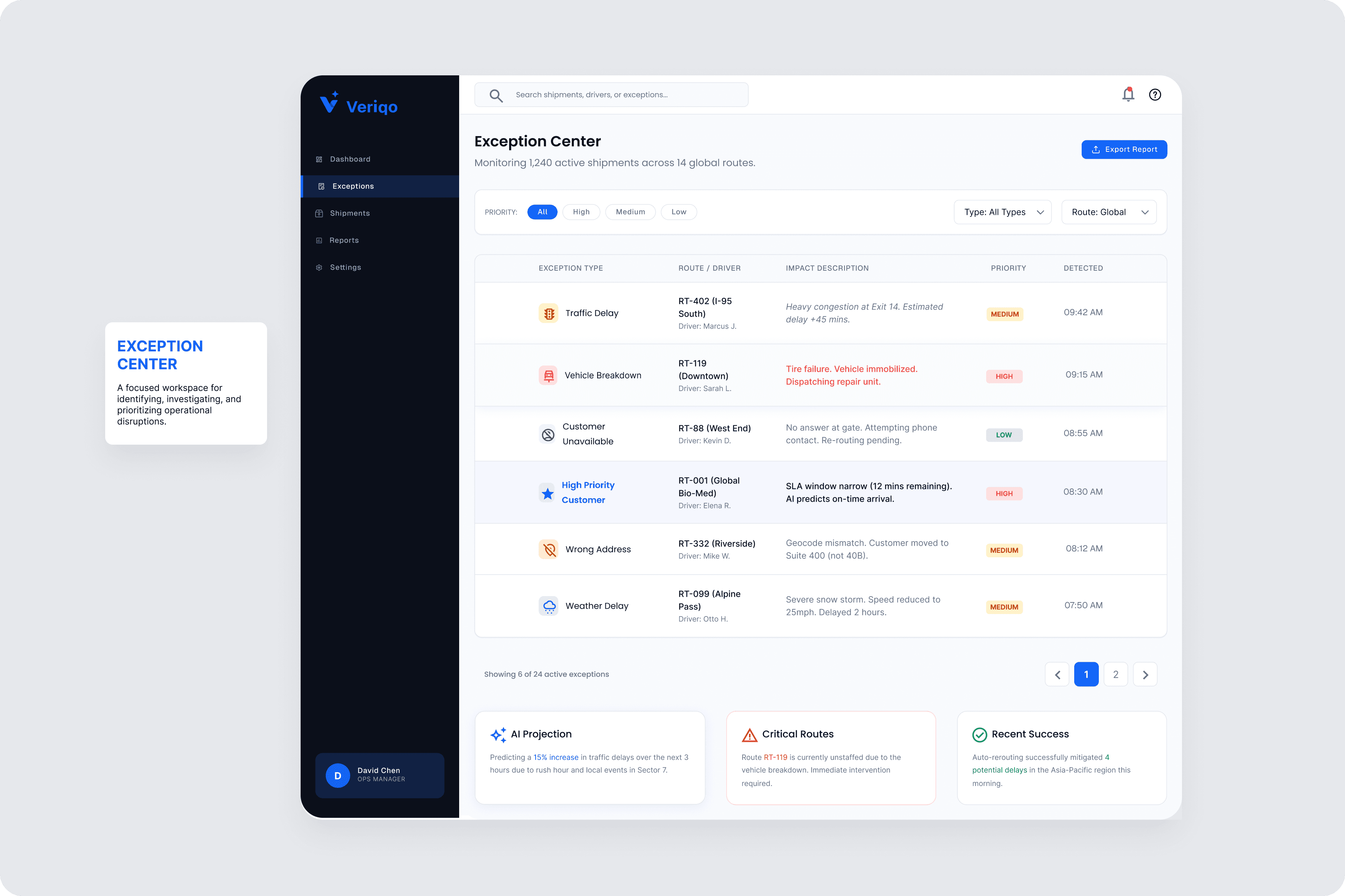
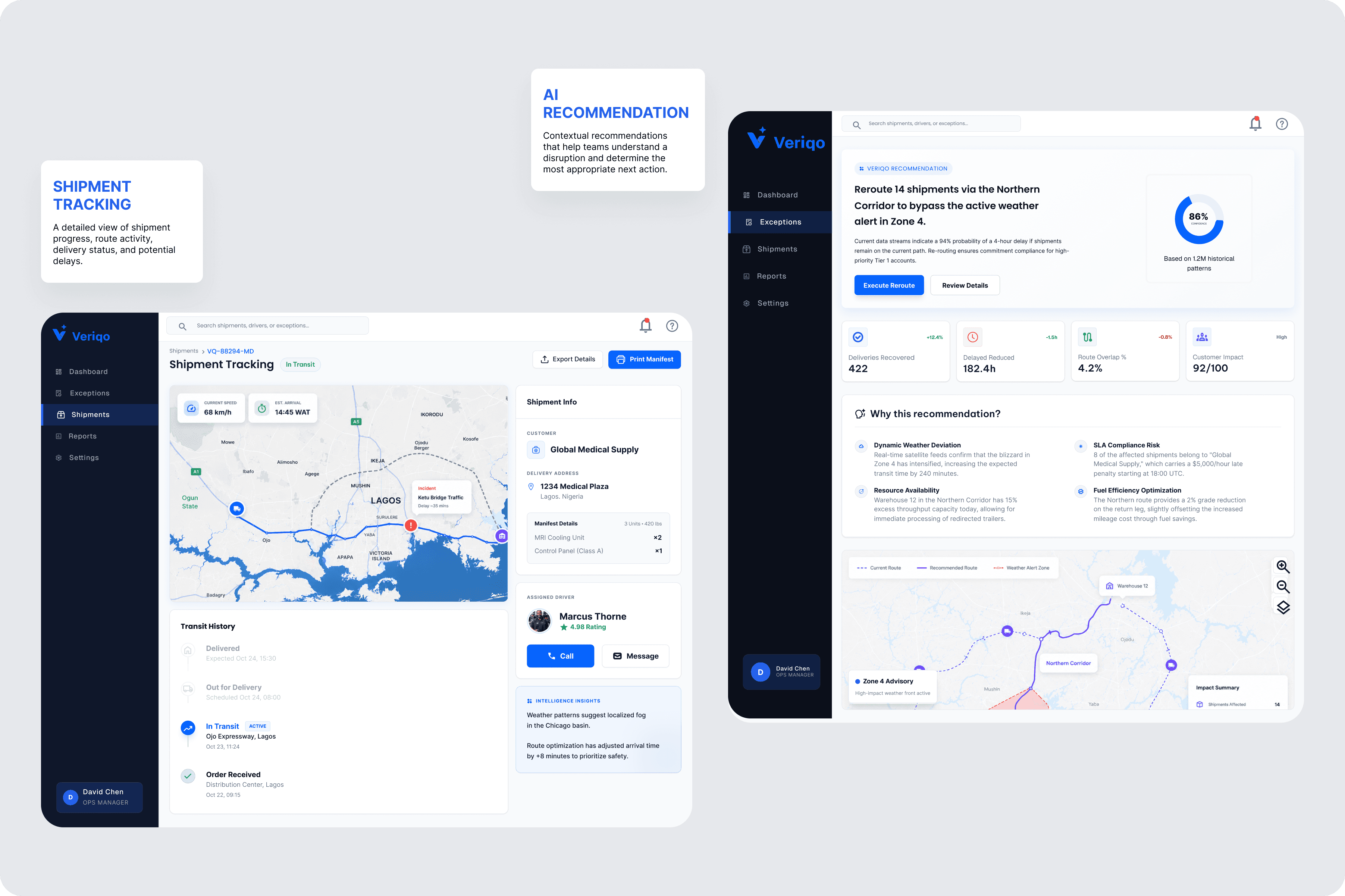
The core experience is designed around the operational journey, from understanding what is happening across the network to identifying disruptions, making informed decisions, and monitoring performance over time.

Operational Response:
A connected workflow that helps teams identify disruptions, investigate their impact, and determine the right action to keep shipments moving.
Identify the exception → investigate the shipment → understand the situation → receive a recommendation → resolve it.
Challenges & Design Decisions:
Challenge 01 — Designing for information density
Logistics platforms contain a lot of information. The challenge was deciding what deserved immediate attention versus what could remain secondary.
Decision: Prioritize operational status, exceptions and actionable information.
Challenge 02 — Making AI useful rather than decorative
Instead of adding an AI assistant simply because the product is AI-powered, I explored AI where it could support operational decisions.
Decision: Position intelligence around detection, prediction and recommendations.
Design Outcomes
The project resulted in:
A complete logistics operations product concept
A connected operational workflow from monitoring to intervention
A scalable navigation and information architecture
A reusable design system
AI-informed operational patterns
A foundation for future automation
And then:
Because Veriqo is a conceptual product, these outcomes represent design deliverables rather than validated business results.
Reflection
Veriqo changed how I think about designing AI products. The challenge wasn't simply deciding where AI should appear in the interface. It was understanding where intelligence could reduce operational uncertainty and help people make better decisions.
I also learned that using AI during the design process doesn't replace product thinking. It increases the number of directions I can explore, but I still have to determine what the product should actually do, what information matters, and how the experience fits together.
